A Busy Time Ahead: Interview with Central Bank Governor Alexander Demarco
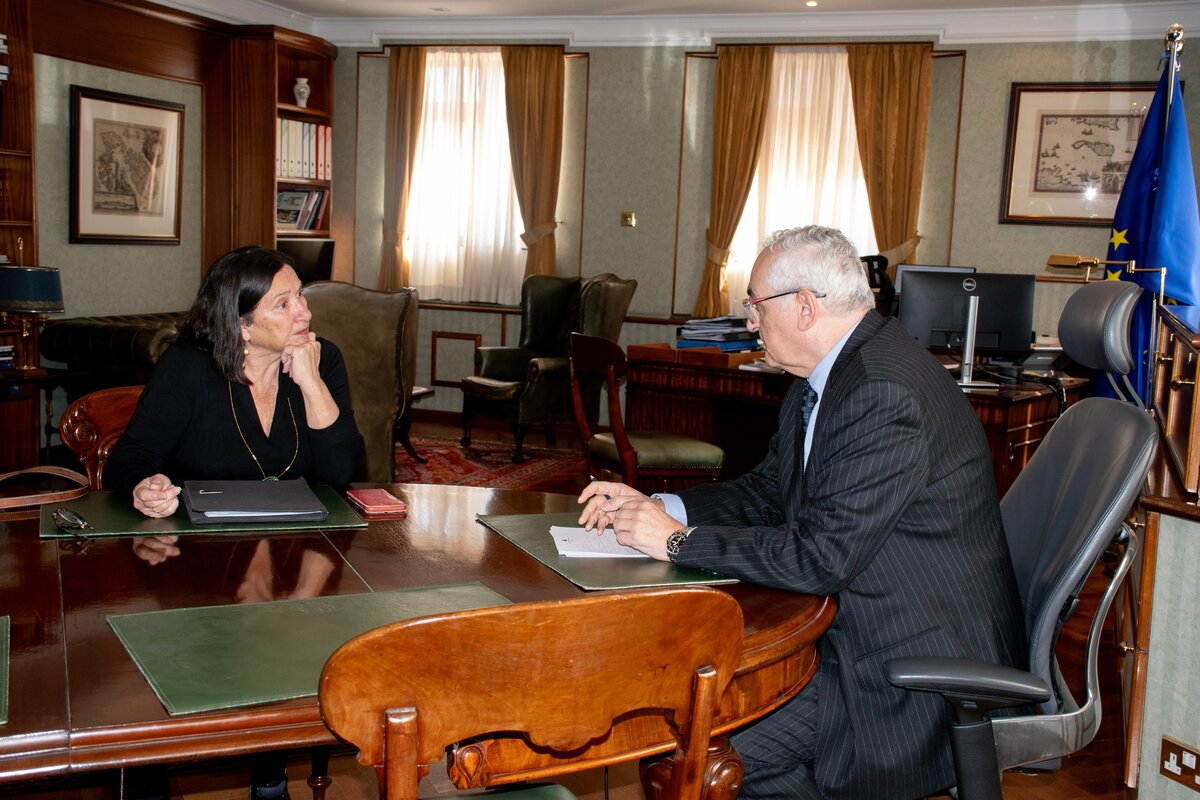
Alexander Demarco was recently appointed as the Governor of the Central Bank of Malta. Vanessa Macdonald asked him about some of the main issues facing the Bank.
Last August, the CBM forecast that Malta's economy was transitioning towards a more sustainable growth path. Is the implication that previous rates of growth were not sustainable?
When economies are still developing, they usually grow at a faster pace than more mature economies. For example, in the past our GDP per capita was always below the EU average, but nowadays, it exceeds both the EU and Eurozone averages as the Maltese economy grew at a relatively faster pace. But the tendency is that once you start converging to higher income countries, your growth rate will slow down. It's only natural that the economy cannot grow continuously at 6-7% per year.
For example, China, until a few years ago, used to grow by 12%, but it then slowed down to around 8-9% growth because the standard of living was rising in China. It's now slowed down to around 5-6% growth, though still fast and still catching up.
What are the considerations? I was looking at some data on wages, for example, from Eurostat. Until a decade or so ago our wages were about 75% of Italy's, for example. Now they are at par as convergence progressed.
We compute potential growth, based on the resources the economy has, how much you can grow on the basis of your labour input, your investment and technology. If we say stop migration, with the native working age population declining, it would make the contribution from labour much less than it was in the last 10 years. So economic growth will be slowed down by lower labour inputs.
Our economy has also changed since decades ago when we had large manufacturing firms which required heavy capital investment. Now services have become dominant, where capital outlays are usually not that big. This means the investment input might be lower as well.
So what remains essentially is growth from technology, and the challenge becomes whether the labour force is better skilled to adapt to be more productive.
It's not just a question of working longer to support economic growth but rather ensuring that those who work are either already skilled or can be trained to work with the new technologies available.
I think there needs to be a bit of a shift in our education system which, probably like many parts of the world, is mostly focused on young people. This will have to change as with technology the older cohort will need to be reskilled to adapt to new technologies. If in terms of skills you become obsolete, your productivity is going to be low. That's how the economy can continue to grow and improve on the growth of 3.7% that we forecast.
So, it's quite cyclical, really, to be expected...
Yes, it's like reaching a stage in your life. The economy cannot grow at the same rate unless there's a technological change that enables people to become more productive.
We keep talking about the carrying capacity for tourism, but nobody's actually ever given any numbers.
The concept of a carrying capacity assumes that everything else stays the same. A few decades ago, when we reached the one million tourist mark, we hardly could imagine that we could arrive at four million! Capacities may change over time, and it is not easy to predict the next 10 or 20 years with such fast changes in technology.
Singapore is a good example. It's an island, maybe twice the size of Malta, with a population density four times ours. In the 1970s, its GDP per capita was more or less the same as Malta's, but it is now about three times ours. And it ranks very highly in the wellbeing index.
It did not have to compromise to achieve this. It is all about how to manage your resources, the investment undertaken, and adaptation to the technology that becomes available.
I'm not saying that we should quadruple our population - but Singapore shows that it could be possible if we manage it right - but is that what we want? From what I hear, people do not seem to think it is possible and neither seems there to be the appetite for this. The example of Singapore only shows what could be possible.
But if we are not going down that route, the alternative would be to grow through higher productivity. The authorities and the political class appear to be conscious of this sentiment. The Vision 2050 document clearly outlines the objective of moving away from labour-intensive industries because we do not have the necessary unutilised manpower to fill such jobs. Therefore, the only option is productivity-driven growth.
However, we cannot rule out further increases in population because there will be some jobs that fewer Maltese will engage in. Such vacancies would need to be filled in some way, unless with technological developments the work requires fewer human input.
When you were talking about Singapore, you said they have economic growth without compromising their wellbeing. Should we continue to measure GDP by economic constraints like inputs and so on, or should we be talking about wellbeing and happiness?
I don't know of any country which has a high wellbeing but low GDP per capita. If you want to have an education, free time and leisure, you also need to have money. You also need money for a nice car, to go on holiday trips, to have designer clothes, etc. All things people aspire for do not come free. So GDP remains a very important measure because a key metric is income - which reflects your ability to consume.
Other indicators like wellbeing are important as well. But I see this as more of a complement to GDP, rather than as a substitute.
Poverty is a major factor in wellbeing. The measure which is most often cited - the National Statistics Office's SILC - refers to the risk of poverty, which is defined by Eurostat as someone who earns less than 60% of the median income. However, there has been significant growth in wages and in female participation. Both these factors boosted family income, not to mention that people also shifted into higher-paid sectors because of the shift in skills. So the measure needs to be interpreted carefully to avoid misleading conclusions.
Compare the income of the working-age cohort to the income of pensioners in their 70s and 80s, where the majority survived with the husband as the breadwinner, and now live on just one pension. In spite of the cost-of-living increase and government top ups, that was not enough to outweigh the effect of what happened in the last decade. So according to the relative poverty measure, pensioners have become relatively poorer but not poorer in absolute terms. In fact, absolute poverty has declined by half over the last decade or so.
Governor, you keep referring to data and studies. Who does this research?
The Bank has had a research department since its inception. When I became an economist in the early 90s, we had started working on econometric models and things have evolved considerably since then. Today the Bank produces a monthly update, a quarterly review, the annual report, and working papers and policy notes. We also organise an annual research workshop. Some of our output makes it to international journals. The economics department has some 28 economists, 12 of whom work on research alone.
We are now trying to improve our outreach to the public by producing non-technical versions of the research, which the staff can publish in the media. This approach is gaining traction and the work of our staff is gaining more visibility.
We are also developing a research section in our financial stability division to better understand the financial system, how banks are linked to each other and other financial institutions, for example, and better enable the Bank in macro-prudential policy making. Keep in mind that our objective is not only price stability but also financial stability. As the macro-prudential authority, we issue directives and measures to address any potential risks - and all this has to be evidence-based and not simply based on hunches.
Spoken like a true economist. If we can look at some of the international developments, it looks as though the digital euro could be introduced as early as 2029.
This important project has been on the cards since 2021. In 2023, the Commission published its legislative proposal. But there have been several concerns raised, some of which were quite unjustified. For example, there was great fear that the ECB was going to look into how and where citizens spend their money, which is absolutely not the case. It has been designed such that transactions are undertaken through intermediaries, like your bank or your payment service provider, and the ECB or national central banks will not have any access to such information.
Apart from that, there was also pressure from the banking sector, which was concerned that people would withdraw deposits and place their money in a digital euro account, with that money on the books of the ECB as a liability in its balance sheet. We addressed that through holding limits - which will be determined closer to the launch date.
Now, the ECB is starting to plan for embarking on pilot testing with some banks and providers. My understanding is that, in May, the European Parliament will vote on the legislation for a digital euro. But in tandem with this, there is another legislative piece, that tends to be overlooked, which would make both physical cash and the digital euro legal tender by regulation.
One of the unjustified fears was that the digital euro was being introduced as an attempt to reduce the use of cash, which is absolutely not the case. Last year, there was a nation-wide power cut in Spain and Portugal. In such circumstances, how could citizens pay without cash? Banknotes and coins can provide an important contingency in the absence of electrical power or, for example, in the case of cyber-attacks.
We did a survey last year to see whether the public were willing to use the digital euro and just over half said they would do so. Indeed, Malta appears to be one of the EU countries with the highest rates of willingness to use the digital euro!
While talking about banks, let me raise the subject of the payment hub.
Unfortunately, we had tried some 10 years ago or so to get the banks together to create an interoperable system where it doesn't matter with whom you bank, and which would not require the IBAN number, which is long and cumbersome for people to use.
Banks were reluctant as they had invested in their own systems and had no appetite to spend on a new system, while some banks were concerned about their market share. The idea fell through - which I think they now realise was a mistake because through passporting and technological developments, foreign providers without a physical presence have strongly penetrated the local market in the payments landscape.
We are now exploring other avenues on how banks can provide a seamless interoperable payment system not only nationally but across Europe. There are emerging European-wide initiatives that they can link up to, where the customer does not need to input his/her IBAN number in payment transactions. It makes it far easier for people, and that is something that is very much on our mind.
Looking beyond Europe, could the euro challenge the dollar as the global currency?
The developments in the United States over the last year or so have made investors reconsider their investment portfolio. This does not mean that they want to move out completely of the United States: that's not likely to happen, at least anytime soon.
But certainly, investors have realised that they were perhaps a bit overweight in their investments in the United States and want to look elsewhere. That's clearly an opportunity for Europe to promote the international role of the euro and there has been some movement in that direction.
Things like this do not happen automatically and we will have to roll up our sleeves as well if we want to promote the euro internationally. Why am I saying that? Because at the end of the day, you have to provide assets for investors to invest in. For example, we need to have a deeper capital market, something which has been under discussion for many years.
We need a real capital markets union and a European safe asset - a common euro bond - to create supply of assets for foreign investors. Such common bonds could be linked to pan-European strategic investments, like in energy, technology, or defence, although unfortunately there is still resistance from some countries to this.
Also, I think if we want to strengthen the international role of the euro, Europe needs to be more competitive. A possible side effect of this could be an appreciation of the euro, which we've already seen to some extent over the last year or so. That would imply some loss in price competitiveness for exporters.
What is the exposure of the Maltese economy to dollars?
Last year when there was the tariff storm, we wanted to assess how this would impact Malta. We found that exposure to trade with the US had decreased a lot over time. In the early 2000s, imports used to be about 7% of GDP and are now down to 3% while exports went down from 14% to around 5%.
Mind you, many of the goods we trade with the US are not subject to tariffs which means that the impact is even lower. In fact, we estimated that the impact of tariffs would be around 0.2% of GDP, mostly because of indirect effects from Europe, which is our main trading partner. What matters more would be any change in foreign demand, because we estimate that the effect on economic growth of that would be much larger.
At least there has been some positive news from the trade deals that the EU has made with Mercosur and India. It is important for the EU to remain open to international trade because that brings benefits, as long as it is fair, and that would be also very beneficial for Malta.
The ECB and other central banks took quite a strong stand recently when the chair of the Federal Reserve Jerome Powell was under fire, expressing solidarity. Is this quite unusual?
The point was to emphasize the importance of central bank independence.
There is ample empirical evidence that the price stability objective is more likely to be achieved with central bank independence. That's a very important goal, because high inflation destabilises an economy as it erodes consumer and investor confidence.
Besides, at the end of the day, if you don't have price stability, financial stability can be also severely undermined because banks will perceive higher risks. High inflation could lead to more defaults on loans and increases the likelihood that your currency will lose its value. This would mean that people would be more inclined to move their money out of the country, which means withdrawing deposits from banks, and thereby destabilising the financial system.
So it's important to achieve price stability and keep inflation stable. That is why we emphasize the importance of independence of central banks.
I have no reason to believe that the new chair of the FED will be any different from his predecessor in that he will be committed to fulfil the mandate of the FED.
And, final question, are there any plans for a governing council meeting to be held in Malta?
The last - and only - Governing Council meeting we hosted was in 2015. The out-of-Frankfurt Governing Council monetary policy meetings are only held once a year so it is not likely to be our turn again for these five years, but we could offer to host a retreat for the Governing Council, which is usually held each year too.